.51e59034.svg)







Namaz Maghrib (صلاة المغرب) is the fourth of Islam's five daily prayers, performed at sunset. It marks the transition from day to night with three obligatory (fard) units (rak'ahs). It signifies gratitude for the day, spiritual renewal, and begins just as the sun sets. Its time ends when twilight fades and offers a moment of calm and reconnection with Allah before nightfall.
What is Maghrib Prayer?
Maghrib prayer is one of the five mandatory daily prayers in Islam, performed just after sunset. The term "al-maghrib" literally means "the west" or "sunset" in Arabic. It reflects the time when this salat al maghrib is observed. For Muslims worldwide, this prayer marks the transition from day to night and holds special significance as it is mentioned directly in the Quran.
Allah says in the Quran;
فَسُبْحَـٰنَ ٱللَّهِ حِينَ تُمْسُونَ وَحِينَ تُصْبِحُونَ
So glorify Allah in the evening and in the morning (Surah Ar-Rum (30:17-19)
In another verse the Quran mentions;
أَقِمِ ٱلصَّلَوٰةَ لِدُلُوكِ ٱلشَّمْسِ إِلَىٰ غَسَقِ ٱلَّيْلِ وَقُرْءَانَ ٱلْفَجْرِ ۖ إِنَّ قُرْءَانَ ٱلْفَجْرِ كَانَ مَشْهُودًۭا
Observe the prayer from the decline of the sun until the darkness of the night and the dawn prayer, for certainly the dawn prayer is witnessed by angels. (Surat Al-Isra Ayat 78)
When is Maghrib? Understanding Maghrib Time
The maghrib time begins immediately after the sun sets below the horizon and continues until the red twilight disappears from the sky.
The prayer time begins right at sunset, announced by the maghrib adhan (call to prayer). The adhan al maghrib calls believers to prayer.
When does maghrib end?
The time window for maghrib salah extends until the red twilight fades completely, which typically lasts about 60-90 minutes depending on geographic location. After this period, the time for the Isha prayer begins.
How Many Rakats in Maghrib Prayer?
The Islamic prayers consist of Rakats (units). Each salah has different units. Maghrib Salah Rakats consist of:
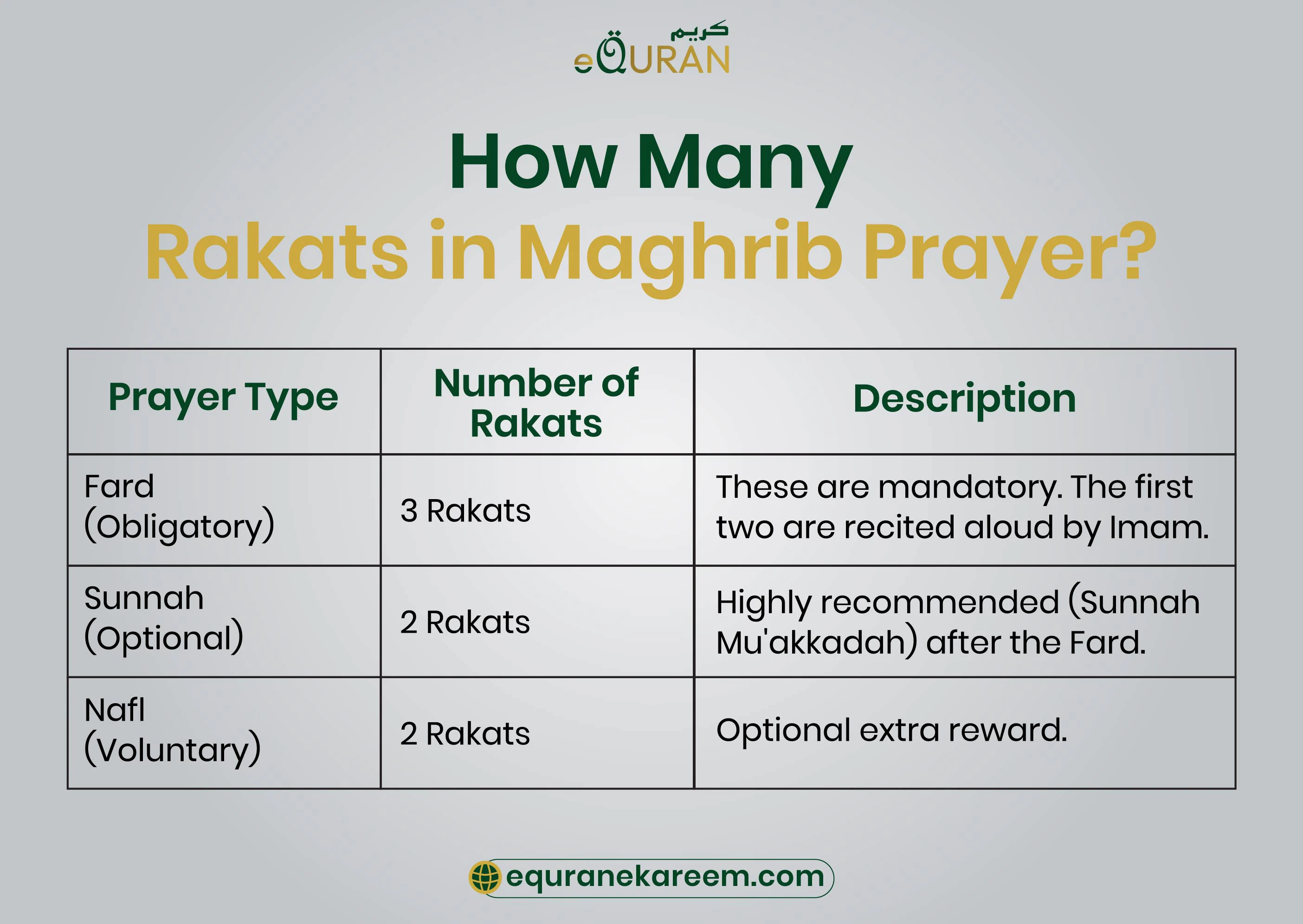
- 3 Fard (obligatory) Rakats - These are mandatory
- 2 Sunnah Rakats - These are highly recommended
- 2 Rakat Nafl- These are voluntary rakats
The rakat in maghrib prayer structure makes it unique as the only prayer with an odd number of obligatory Rakats.
Help your kids learn prayers and supplications online
Azan Maghrib
Adhan is the call to prayer. It is performed when the time of the specific prayer starts. Azan Maghrib is the call for Maghrib salah. It marks the start of the evening prayer and the beginning of the Islamic day from sunset.
The time of Maghrib Adhan starts just as the sun disappears below the horizon.
How to Pray Maghrib: Step-by-Step Guide
The Maghrib prayer is the fourth of the five daily obligatory prayers in Islam. It is performed just after sunset and consists of three mandatory (Fard) Rakats.
Unlike the afternoon prayers, Maghrib begins with audible recitation, making it a beautiful and vocal transition into the evening. Here is the step by step guide on how to offer Maghrib prayer.
Pre-Prayer Requirements
- Wudu (Ablution): Ensure you are in a state of ritual purity.
- Intention (Niyyah): Mentally intend to pray the 3 Rakats of Fard Maghrib for the sake of Allah.
- Qibla: Stand facing the direction of the Kaaba in Makkah.
Step-by-Step Guide to the 3 Fard Rakats
Rakat 1
- Takbir Tahreema: Raise your hands to your ears and say "Allahu Akbar" (Allah is the Greatest) to begin.
- Qiyam (Standing): Fold your hands over your chest (right over left). Recite Surah Al-Fatiha, followed by another short Surah (like Surah Al-Ikhlas).
- Ruku (Bowing): Say Allahu Akbar and bow down with hands on knees. Say Subhana Rabbiyal Azeem (Glory be to my Lord the Great) 3 times.
- Rise: Stand up and say Sami’ Allahu liman hamidah (Allah hears those who praise Him), followed by Rabbana Lakal hamd (Our Lord, all praise is Yours).
- Sujud (Prostration): Say Allahu Akbar and prostrate with your forehead, nose, palms, knees, and toes touching the ground. Say "Subhana Rabbiyal A’la" (Glory be to my Lord the Most High) 3 times.
- Sit and Repeat: Sit up briefly saying "Allahu Akbar," then perform a second Sujud exactly like the first.
Rakat 2
- Stand up: Say Allahu Akbar and return to the standing position.
- Repeat Recitation: Recite Surah Al-Fatiha and another short Surah.
- Repeat Actions: Perform the Ruku, rising, and two Sujuds exactly as in the first Rakat.
- First Tashahhud: Instead of standing up after the second Sujud, stay sitting and recite the At-Tahiyyat prayer.
Rakat 3
- Stand up: Say "Allahu Akbar" and stand for the final unit.
- Silent Recitation: Recite only Surah Al-Fatiha. Do not recite an additional Surah in this Rakat.
- Final Actions: Perform the Ruku, rising, and two Sujuds.
- Final Tashahhud: Sit for the final time. Recite the At-Tahiyyat, followed by Durood (sending blessings upon the Prophet) and any personal Duas.
Concluding the Prayer
Turn your head to the right and say ‘Assalamu Alaikum wa Rahmatullah’ (Peace and mercy of Allah be upon you). Then turn to the left and repeat the same.
Summary Table: Maghrib Rakat Structure

Maghrib in Ramadan
During Ramadan, Maghrib prayer holds extraordinary significance as it marks the moment when Muslims can break their daily fast. The call to Maghrib becomes one of the most anticipated sounds of the day, signaling relief, gratitude, and spiritual fulfillment.
The Moment of Iftar
In Ramadan, the Maghrib Azan serves as the official signal to break the fast. Following the tradition of the Prophet Muhammad (peace be upon him), Muslims break their fast with a few dates and a sip of water before standing for the formal prayer.
The Relationship Between Maghrib and Iftar
There is often a specific sequence followed during Maghrib in Ramadan to balance spiritual needs with physical nourishment:
- The Adhan: You hear the call to prayer.
- Immediate Iftar: You say a short Dua and eat a date or drink water.
- The Prayer: You perform the 3 rakats of Maghrib (often in congregation at the mosque). This keeps the focus on worship before eating a full meal.
- The Main Meal: After the prayer, the family gathers for the larger "Iftar" meal.
Importance and Benefits of Namaz Maghrib
The Maghrib salaah holds a special position among the five daily prayers in Islam. It serves as a vital spiritual transition, bridging the end of daily activities with the onset of the night.

Forgiveness and Renewal
Maghrib prayer offers a daily opportunity to cleanse the soul from accumulated sins. As the day concludes, Muslims stand before Allah seeking His mercy and pardon for mistakes committed. The Prophet (SAW) said:
The five daily prayers and from one Friday prayer to the next expiate whatever sins have been committed between them, so long as one does not commit any major sin. (Sahih Muslim 233).
This ritual of repentance allows believers to close each day with a fresh spiritual slate, preventing the burden of guilt from accumulating and maintaining a pure heart.
Strengthened Faith
Regular performance of Maghrib prayer acts as an anchor for Islamic identity and belief. By pausing daily activities to answer Allah's call, Muslims reinforce their commitment to Islamic values and principles. This consistent practice strengthens iman (faith), making it resilient against doubt and worldly distractions.
The prayer serves as a spiritual checkpoint, reminding believers of their purpose and priorities. It transforms faith from abstract belief into lived reality, grounding theoretical knowledge in practical devotion and creating a tangible daily connection to one's religious identity.
Inner Peace and Reflection
As the sun sets and the day's hustle quiets, Maghrib provides a serene moment for contemplation and gratitude. Standing in prayer allows Muslims to reflect on the day's blessings, challenges, and lessons learned. This peaceful transition from day to night offers mental clarity and emotional balance. The rhythmic movements and Quranic recitation calm anxious thoughts and center the mind. Allah says:
Those who believe and whose hearts find peace in the remembrance of Allah. Verily, in the remembrance of Allah do hearts find peace. (Quran 13:28).
This tranquil pause rejuvenates the spirit before evening activities begin.
Spiritual Protection
Maghrib marks the beginning of night, a time traditionally associated with increased spiritual vulnerability. The prayer acts as a protective shield against negative influences, evil whispers, and unseen harms. The Prophet (SAW) advised:
When the evening comes, restrain your children, for the devils spread out at that time. (Sahih al-Bukhari 3280).
By engaging in worship precisely at this threshold moment, believers invoke Allah's protection and surround themselves with divine light. The supplication and remembrance of Allah create a spiritual fortress, guarding against both physical and metaphysical dangers throughout the night.
Deepened Connection to Allah
Maghrib prayer serves as direct, intimate communication between the servant and the Creator. Without intermediaries, Muslims speak to Allah, pour out their hearts, and experience His presence.
This regular dialogue deepens spiritual awareness and cultivates consciousness of Allah (taqwa) throughout daily life. The physical prostration symbolizes complete submission, while the recitation of the Quran connects the believer to divine words.
Through consistent practice, this relationship grows stronger, transforming prayer from a ritual obligation into a cherished meeting with the Beloved. The Prophet (SAW) described prayer as "the coolness of my eyes," indicating its profound spiritual sweetness and fulfillment.
Conclusion
Maghrib prayer is a fundamental pillar of a Muslim's daily worship, commanded by Allah and emphasized by the Prophet (SAW). Maghrib salah, or the evening muslim prayer, serves as a daily reminder to pause, reflect, and reconnect with our Creator as the day transitions to night. By understanding its timing and proper method, we can fulfill this obligation with greater awareness and devotion.
Learn Quran and Prayers Online
Are you looking to connect with Islam through the Quran and prayers? We can help you. We offer comprehensive online Quran courses to help you and your family learn Quran and daily prayers from home. You will get expert guidance from professional Islamic scholars.